



What Is a Gel Ice Pack? (Direct Definition)
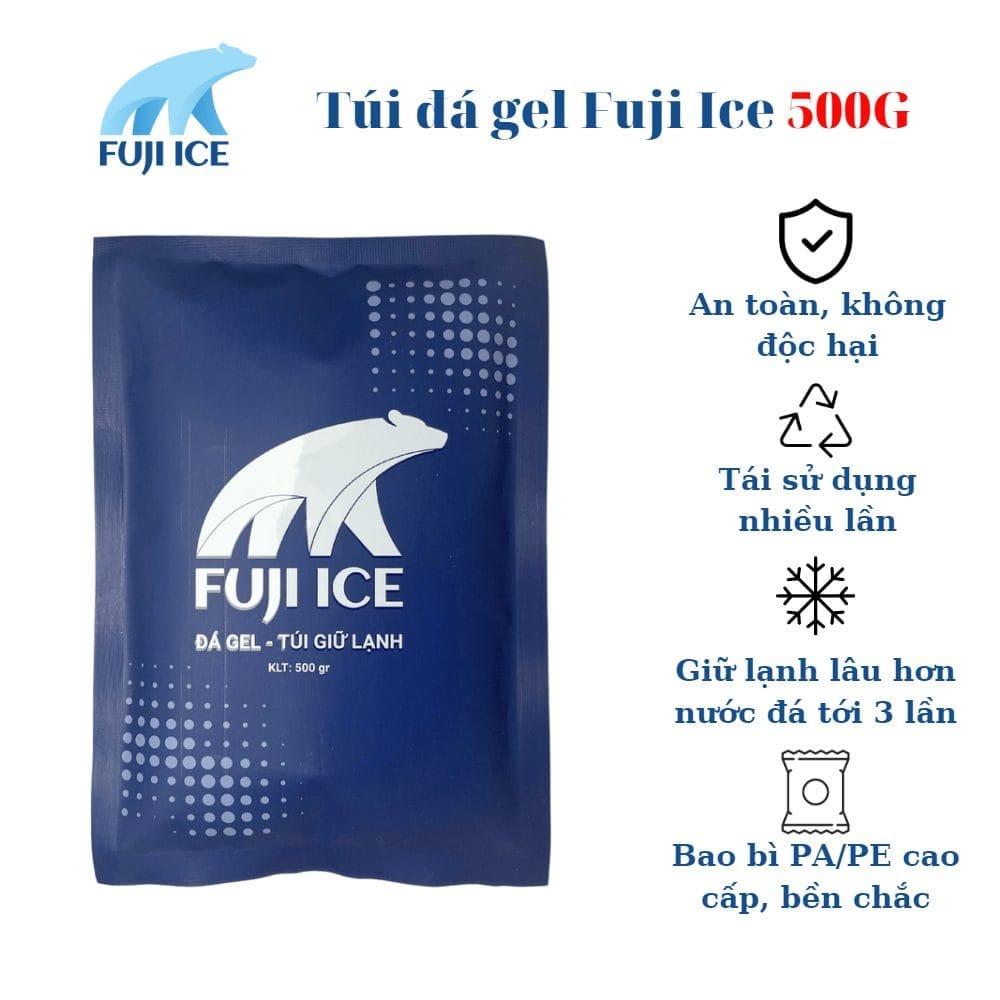
Gel ice (also known as a Gel Ice Pack or Ice Pack) is a phase change material (PCM) made from a mixture of water and Super Absorbent Polymer (SAP) beads. Once frozen, the gel turns into a solid state and absorbs ambient heat as it melts, keeping the surrounding temperature stable and cold. Unlike regular ice, a gel ice pack doesn’t melt into liquid water — it stays in a thick gel form, so it never gets your goods wet.
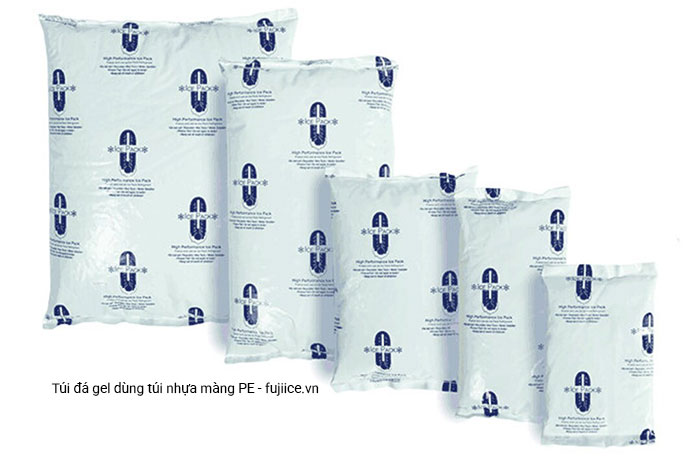
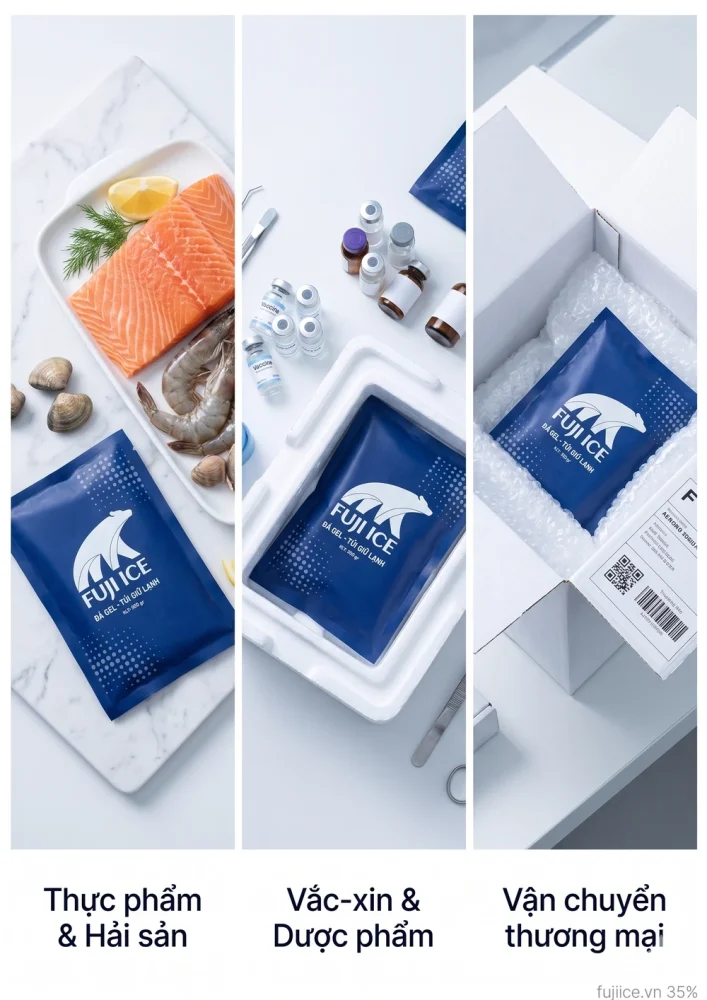
In practice, gel ice is packaged in PA/PE laminated plastic pouches or rigid HDPE plastic boxes, and is widely used to preserve and transport fresh food, pharmaceuticals, vaccines, and cosmetics throughout the cold supply chain.
Development History: From a 1971 Medical Invention to Modern Cold Chain
Gel ice originated in the medical field, not the food industry.
- 1971: The first patent for a cold/hot gel therapy pack (“Gel application for hot and cold therapy”) was filed by inventor Jacob in the United States, originally intended for pain relief and sports injury therapy.
- 1973: Patent number US 3,780,537 was officially granted.
- 1990s–2000s: With the boom of e-commerce and cold logistics, gel ice shifted from medical use to mass adoption in the food and pharmaceutical industries.
- Today: Gel ice is an indispensable part of commercial cold storage, gradually replacing traditional water ice thanks to its no-wetting property and multiple reusability.
References: Ice pack history — Wikipedia; US Patent 3,780,537 — Google Patents
Chemical Composition of Gel Ice
A standard gel ice pack consists of 2 main components:
1. Super Absorbent Polymer (SAP)
SAP (commonly known scientifically as Sodium Polyacrylate) is a synthetic polymer capable of absorbing and retaining up to 200–500 times its dry weight in water. This is the component that creates the characteristic gel structure.
To learn more about this component, see: SAP powder for gel ice — a detailed analysis of its molecular structure and applications.
Chemical properties of SAP:
| Property | Specification |
|---|---|
| Chemical name | Sodium Polyacrylate (Poly Acrylic Acid, sodium salt) |
| Molecular formula | [-CH₂-CH(COONa)-]ₙ |
| Water absorption capacity | 200–500 times its dry weight |
| State | White powder/granules, turns into a thick gel on contact with water |
| Safety | Non-toxic, does not react with food, commonly used in baby diapers and supermarket food trays |
| Melting point | Depends on the water mixing ratio and the type of SAP used |
A note on SAP quality: Low-grade SAP suffers from “water separation” (syneresis) — the gel separates into layers after a number of freeze cycles, reducing cooling performance. High-grade SAP (as used in Fuji Ice products) maintains a stable gel structure through hundreds of freeze-thaw cycles.
2. Water (H₂O)
Water is the solvent that combines with SAP to form the gel mixture. The water content in commercial gel ice typically accounts for 85%–98% of the volume, depending on the phase-change temperature design of each product line.
- 0°C phase-change gel (basic type): Low SAP ratio, melting point close to that of ordinary water.
- PCM gel with a phase-change range of -2.5°C to +5°C: Additional organic PCM additives are used to precisely fine-tune the phase-change temperature to match specific storage requirements.
Physical Structure of a Gel Ice Pack
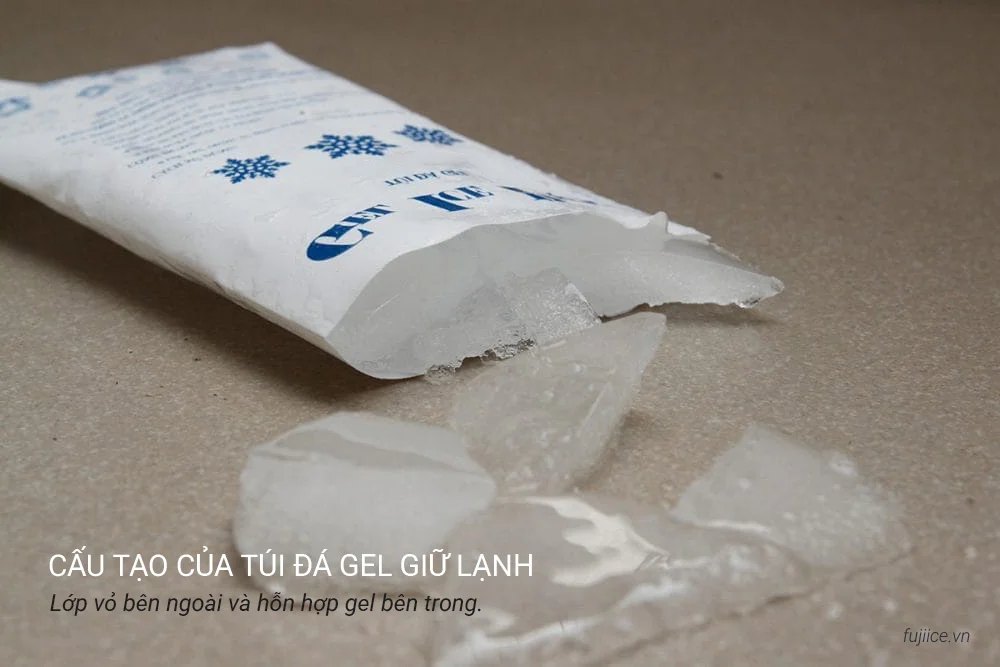
A gel ice pack has 2 main structural parts: the outer shell and the gel mixture inside.
Outer Shell — 3 Main Types on the Market
The outer shell’s function is to contain the gel mixture, prevent leaks, and withstand deep-freeze conditions. There are currently 3 common shell material types:
| Shell type | Material | Durability | Suitable applications | Reusability |
|---|---|---|---|---|
| Single-layer PE pouch | Single-layer Polyethylene (PE) plastic | Low — tears easily under puncture or heavy compression | Single-use, low-value fresh food | Limited (<50 uses) |
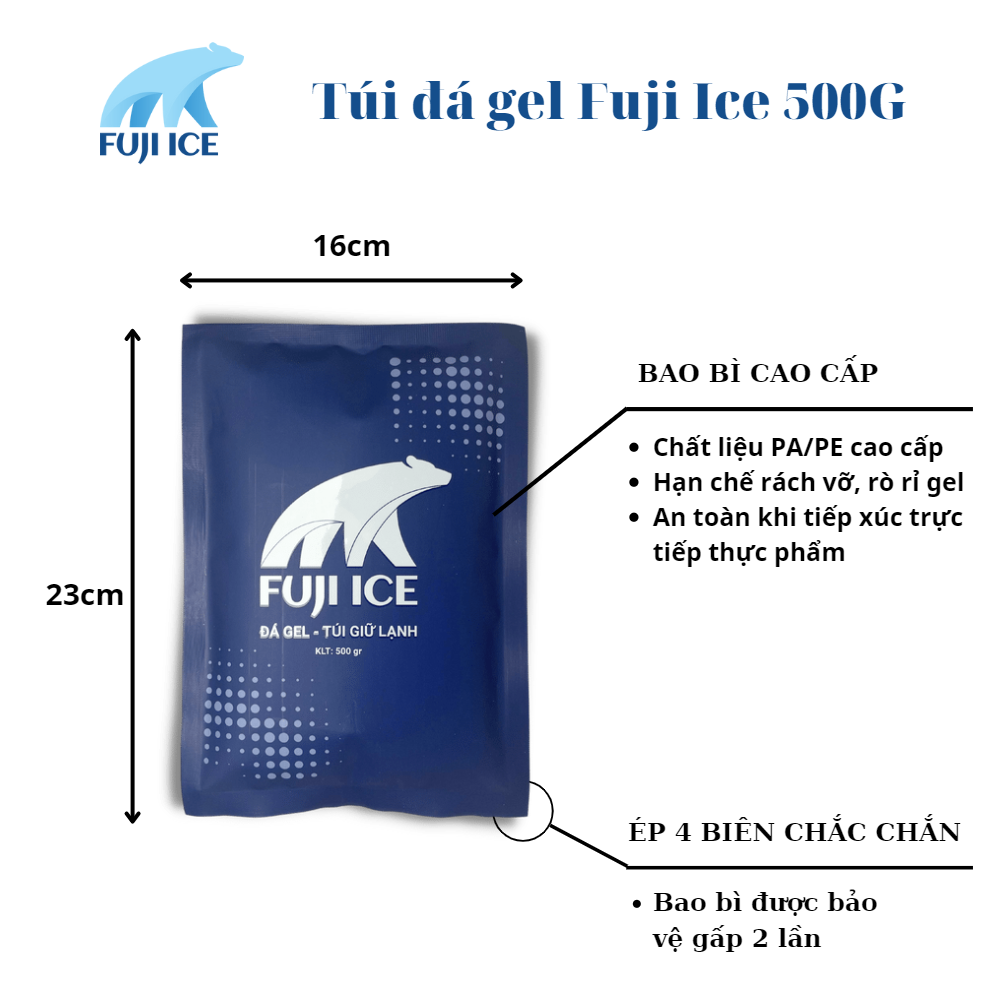
| PA/PE laminated pouch | 2-layer laminate: Polyamide (PA) + Polyethylene (PE) | High — double the durability of a single layer, strong puncture resistance | Premium food, pharmaceuticals, export goods | Good (100–300 uses) |
| Rigid HDPE plastic box | Virgin High-Density Polyethylene (HDPE) | Very high — high-tech fixed heat-sealed lid, impact resistant | Vaccines, medical use, long-term commercial reuse | Excellent (600–800 uses) |
Why does PA/PE laminated film outperform single-layer PE?
The outer Polyamide (PA) layer provides puncture resistance and withstands sub-zero temperatures without becoming brittle. The inner PE layer ensures reliable heat-sealing and safe food contact. This combination delivers far superior durability compared to single-layer PE film alone — which is why professional-grade gel ice products all use PA/PE laminated pouches.
The Gel Mixture Inside — The Phase-Change Mechanism
The gel mixture is the “soul” of the product. It works on the principle of phase change:
- Heat-loading phase (Freezing): When placed in a freezer, the gel mixture absorbs cold energy and transitions from a gel state into a solid (frozen) state. Cold energy is stored within the polymer structure.
- Heat-release phase (In use): Once removed from the freezer, the gel is exposed to ambient temperature. The melting process absorbs surrounding heat (an endothermic reaction), keeping the interior of the cooler box at a low temperature for an extended period.
- Latent heat of phase change: This is why gel ice is more effective than ordinary ice — the latent heat energy of the phase-change process is far greater than the pure specific heat capacity of liquid water alone.
The Science Behind It: Why Is Gel Ice Colder and Longer-Lasting Than Regular Ice?
This is a core technical question that many users still don’t fully understand.
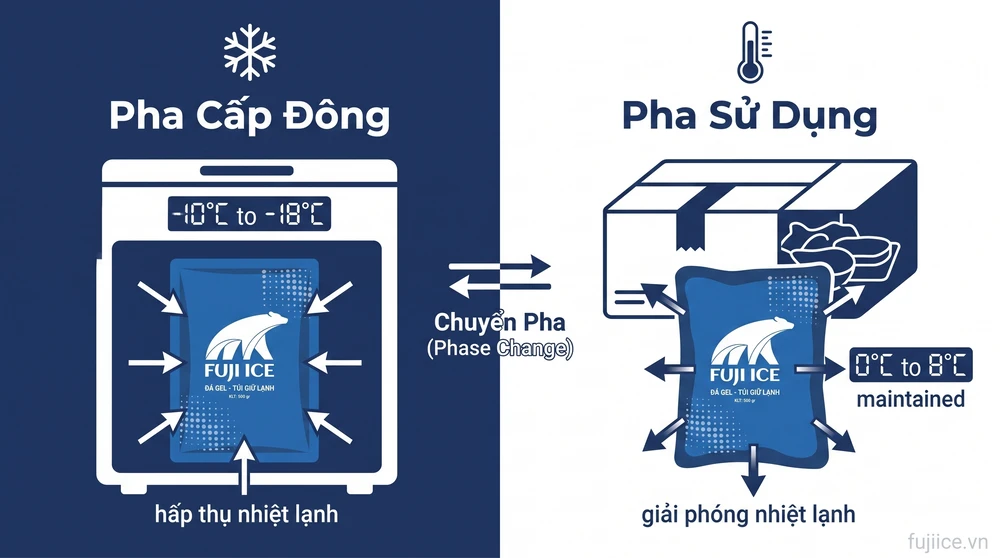
Comparing the physical mechanisms:
| Criteria | Regular water ice (H₂O) | Gel ice (SAP + H₂O) |
|---|---|---|
| Composition | 100% water (H₂O) | Water + Sodium Polyacrylate (SAP) |
| Phase-change point | Fixed at 0°C | Adjustable from -30°C to +5°C depending on design |
| State after melting | Liquid water — wets the goods | Thick gel — doesn’t flow, doesn’t wet anything |
| Melting speed | Fast — surface contact creates runoff channels | Slower — the polymer structure retains moisture |
| Cooling efficiency | Low (melted water loses heat quickly) | 2–3 times higher thanks to the gel structure and latent heat |
| Reusability | No (requires a separate container) | Yes — can be refrozen and reused many times |
| Risk of wetting goods | High | None (even if the pouch has a small leak) |
The science of latent heat, explained:
The solid-to-liquid phase change of water requires the absorption of approximately 334 kJ/kg (the latent heat of fusion of ice). Because gel ice’s polymer structure retains water within its network, it extends this phase-change process — meaning it releases cold energy more slowly and steadily over a longer period of time.
Classifying Gel Ice by Phase-Change Temperature
This is the most important technical classification, helping determine the right type of gel ice for each specific application. For details on individual products and personalized advice, see Fuji Ice gel ice packs.
| Classification | Phase-change temperature | Cooling temperature range | Typical application |
|---|---|---|---|
| Basic gel ice (0°C) | 0°C | 0°C – 8°C | Fresh food, vegetables and fruit, simple transport |
| -2.5°C phase-change gel (PCM Advance) | -2.5°C | 0°C – 4°C | Imported beef, premium seafood, premium beverages |
| PCM Phase 5 gel ice (+5°C) | +5°C | 2°C – 8°C | Vaccines, pharmaceuticals, medical biologics (must not be kept below 2°C) |
| Deep-frozen gel ice (-16°C to -18°C) | -16°C / -18°C | -18°C – -12°C | Frozen food, ice cream, dry-ice (CO₂) replacement |
| Ultra-low-temperature gel ice (-24°C to -30°C) | -24°C / -30°C | -27°C – -21°C | Special vaccines requiring ultra-low temperatures, biological products |
Important technical note: The phase-change temperature is not the same as the cooling temperature. The phase-change temperature is the point at which the gel begins to melt and absorb heat. The cooling temperature range is the range at which the contents inside the insulated container are kept throughout use.
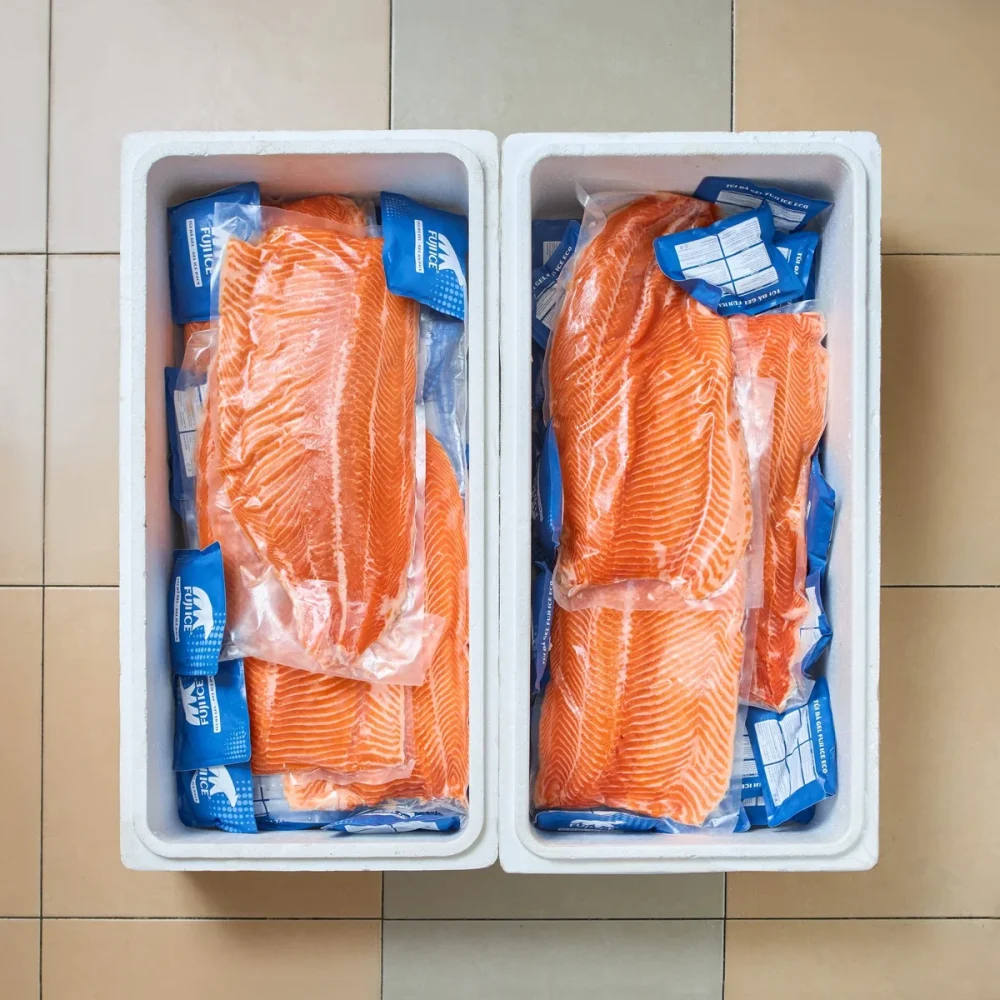
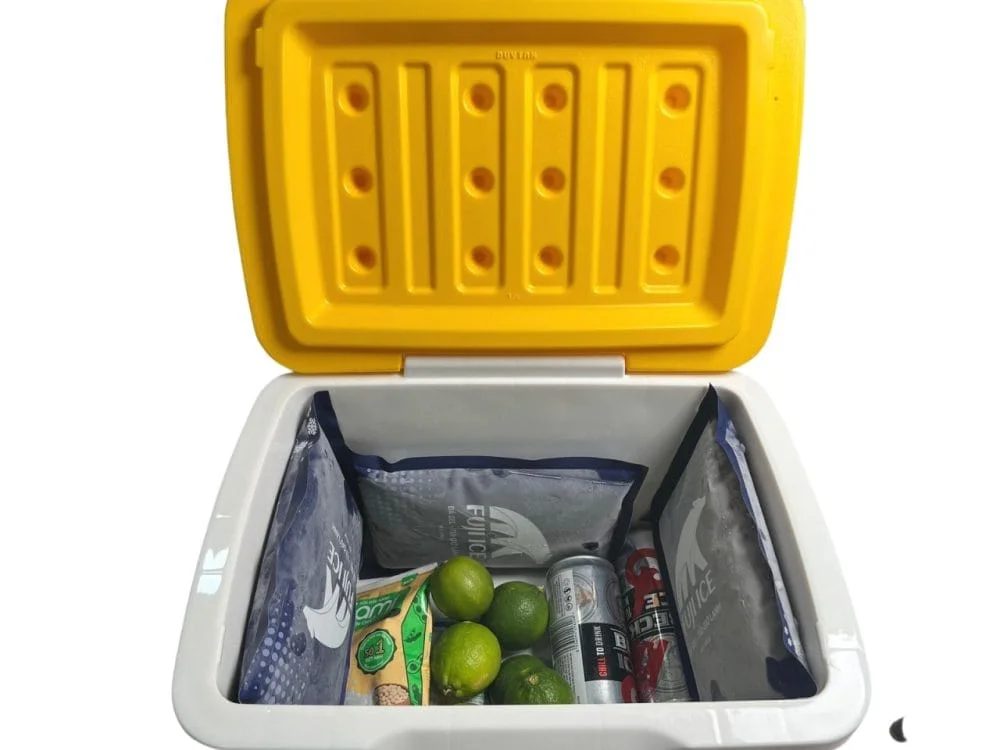

Classifying Gel Ice by Packaging Format
Pouch-Type Gel Ice
The most common format on the market. The gel is packed in a soft, flexible plastic pouch that adapts to irregular spaces inside a shipping container. There are 2 material types: single-layer PE (cheaper, single-use) and PA/PE laminate (durable, reusable many times).
Applications: food, medical, and pharmaceutical transport.
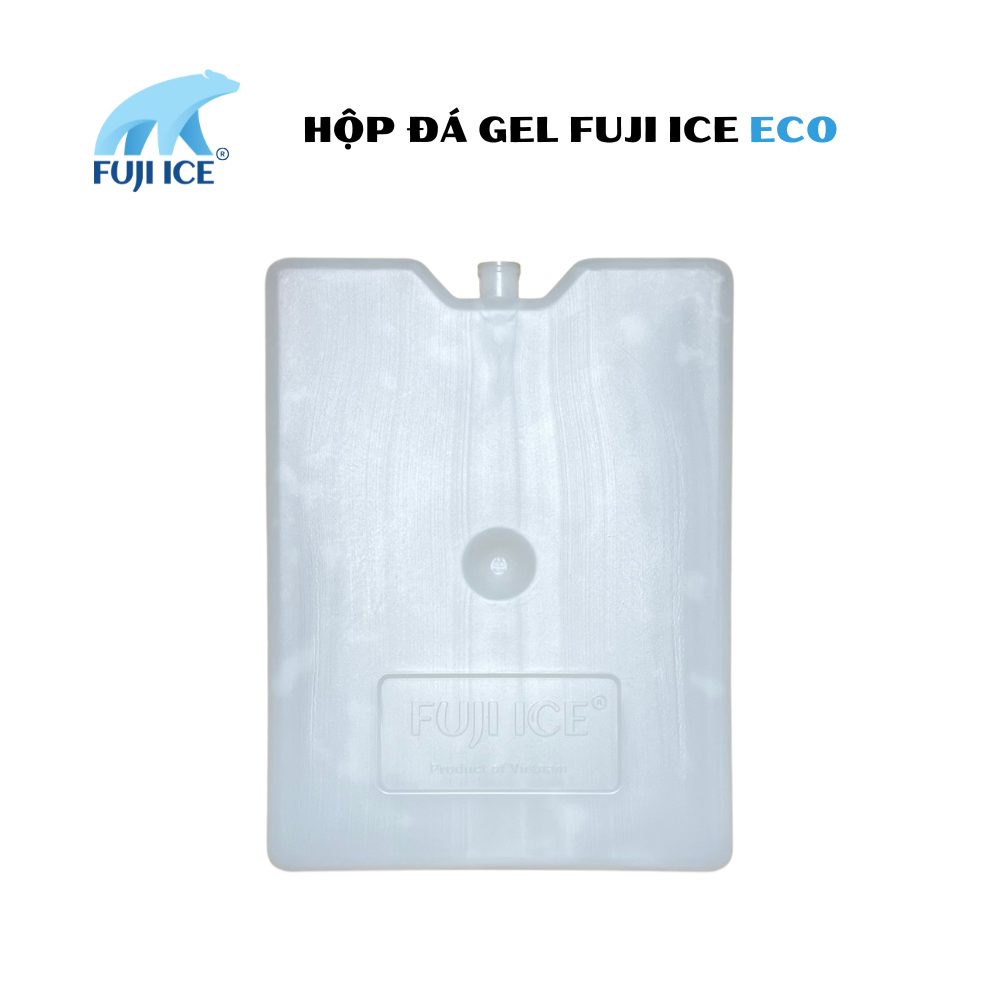
Rigid Plastic Box Gel Ice
Made from virgin HDPE shell with a high-tech fixed heat-sealed lid. Doesn’t deform when frozen, doesn’t leak, and can be reused 600–800 times. Best suited for medical environments and vaccines that require precise temperature control.
Safety Standards for Gel Ice
Gel ice is assessed as safe according to the following international and national standards:
- FDA (USA): Sodium Polyacrylate is classified as Generally Recognized As Safe (GRAS) for indirect food contact.
- EU Regulation 10/2011: Permits SAP in food-contact materials, subject to migration limit regulations.
- WHO EPI Guidelines (2024): Governs cold-chain materials for vaccines — phase-change (PCM) gel ice is a recommended solution for storage at 2°C–8°C.
- TCVN (Vietnam): National standards on the safety of food-contact packaging materials.
Frequently asked safety questions:
Gel ice is non-toxic — SAP is an inert material, the same type of material used as the absorbent in baby diapers. However, it must not be eaten, as a large amount of SAP can cause a gastrointestinal blockage. If skin comes into contact with leaked gel: washing with plain water is sufficient.
Standard Gel Ice Manufacturing Process
Gel ice quality depends directly on the manufacturing process. The standard process consists of 4 steps:
- Mixing: SAP is precisely measured using automatic dosing equipment and mixed with purified, treated water at a designed ratio. The SAP-to-water ratio determines the phase-change temperature and the gel’s consistency.
- Filling: The gel solution is pumped into pouches/boxes using automatic filling machines, with precise volume control.
- Sealing: Heat-sealing or radio-frequency (RF) welding technology ensures the seal doesn’t rupture under heavy pressure or freezing conditions.
- Quality inspection: Leak testing, phase-change temperature testing in the lab, and mechanical durability testing before the product leaves the factory.
Quality certification: The product meets ISO 9001:2015 standards for quality management in production.
How Does Gel Ice Compare to Other Cooling Materials?
| Criteria | Gel ice | Dry ice (solid CO₂) | Regular ice cubes | Old-style hard frozen water (Blue Ice) |
|---|---|---|---|---|
| Composition | Water + SAP | Solid CO₂ | Pure H₂O | Water (no SAP) |
| Temperature | -30°C to +5°C (depending on type) | -78.5°C | 0°C | 0°C |
| Safe for food contact | ✅ Yes | ❌ No (CO₂ causes cold burns) | ✅ Yes | ✅ Yes |
| Wets goods | ❌ No (gel doesn’t flow) | ❌ No (sublimates into gas) | ✅ Yes (melts into water) | ✅ Yes (melts into water) |
| Reusable | ✅ Multiple times | ❌ Single use | ❌ No | ✅ Yes |
| Air transport | ✅ Permitted (with conditions) | ⚠️ Restricted (dangerous goods) | ✅ Yes | ✅ Yes |
| Long-term cost | Low (reusable) | High (single use) | Low but must be bought continuously | Moderate |
Frequently Asked Questions About Gel Ice (FAQ)
Q: What is a gel ice pack, scientifically speaking? A: A gel ice pack is a phase change material (PCM) made from a mixture of water and Sodium Polyacrylate (SAP — Super Absorbent Polymer). It works on the principle of latent heat: absorbing heat during the melting process to maintain a stable, cold temperature around the goods being preserved.
Q: What is the SAP in gel ice? A: SAP (Super Absorbent Polymer) is a synthetic polymer — specifically Sodium Polyacrylate — capable of absorbing 200–500 times its weight in water. It’s a safe material, part of the same material family used in baby diapers and supermarket food trays. When combined with water, it forms a thick gel — the core component of a cooling gel ice pack.
Q: Why doesn’t gel ice melt into water like regular ice? A: Because the SAP polymer’s network structure holds water molecules within a stable 3D structure. Even after the gel transitions from solid to liquid (after melting), the water molecules remain trapped within the polymer network, forming a thick gel rather than free-flowing liquid water.
Q: What does “gel” mean in relation to gel ice? A: “Gel” in gel ice refers to a state of matter — a colloidal state with a polymer network structure that holds a liquid phase inside it. Gel ice is a product that applies this gel state for the purpose of cooling.
Q: What are the components of a gel ice pack? A: A gel ice pack consists of 2 parts: (1) the outer shell — a PA/PE laminated plastic pouch or a rigid HDPE plastic box, which contains and protects the gel from leaking; (2) the gel mixture inside — water + SAP (Sodium Polyacrylate), which is the component that stores and releases cold energy through the phase-change mechanism.
References
- US Patent 3,780,537 — Gel composition for filling flexible containers for use as hot or cold packs (1973)
- Wikipedia: Ice pack — https://en.wikipedia.org/wiki/Ice_pack
- WHO EPI Guidelines 2024 — Temperature requirements for vaccine storage and transport
- FDA GRAS Database — Sodium Polyacrylate food contact substances
- https://nortechlabs.com/company-info/nortech-history/